

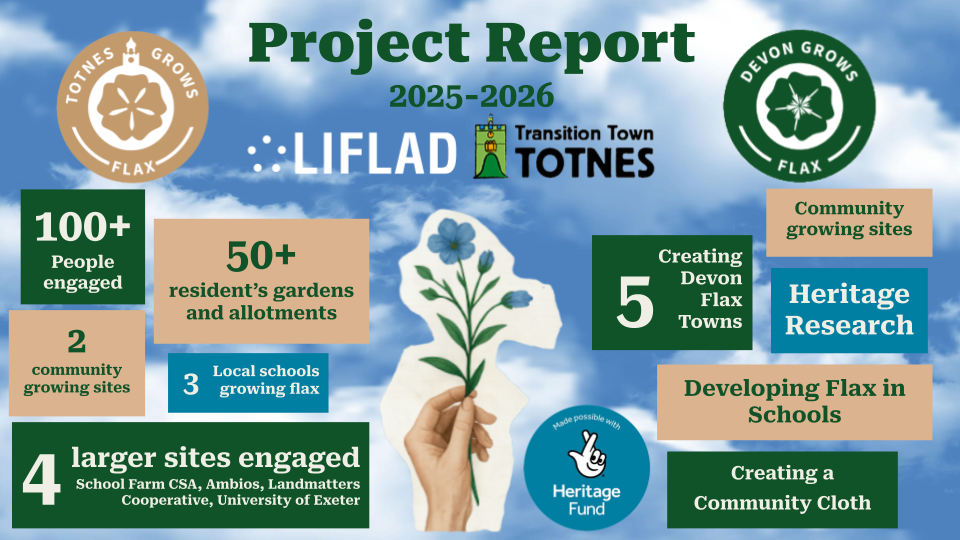
Made possible with the National Lottery Heritage Fund and delivered in collaboration with Liflad CIC, this project aims to uncover, revive and embed heritage flax culture throughout Devon. There are lots of ways to get involved from growing, retting and processing flax to toolmaking, researching, spinning and weaving linen. Sign up to our mailing list to find out more.
How to take part
In 2025 Totnes Grows Flax planted flax throughout over 50 gardens and growing plots throughout our community, we then harvested and processed it together. We are now able to offer a range of ways of taking part in this project and as of April 2026 you can join our wider project, "Devon Grows Flax". Outside of growing flax you can also join processing, spinning, tool making and a flax heritage research group - more information coming soon. You can choose what area of the project you are interested in and want to take part in.
Who can take part?
Anyone who lives in Totnes and District with access to 1m2 of growing space to plant flax seeds (your own or a friend’s front garden, backyard, allotment, established garden or other patch of dirt!) can join. No prior growing experience needed! You’ll receive detailed growing information with your seeds and have the option to join a WhatsApp/Signal group for support. The growing space will ideally contain good quality, free draining soil as fibre flax roots like to go down deep, it also likes full sun and can grow up to 1.2m tall.
Outside of Totnes? As part of Devon Grows Flax we are branching into other corners of the county, with additional hubs being set up in 2027. In the meantime you can start growing flax with us this year already (seed sowing deadline end of April) or join our other project activities.
Interested in joining the project in 2026?
Sign up here or contact viktoria@transitiontowntotnes.org.
You can also catch up on the learning shared at the 2025 kick-off event through our video presentation and flax growing resource guide.
What is Flax?
The flax plant is called Linum usitatissimum, which means ‘most useful’ and flax plants can make food, textiles (linen), building materials and many other practical items that can help replace plastic in our region.

What happened during Totnes Grows Flax?
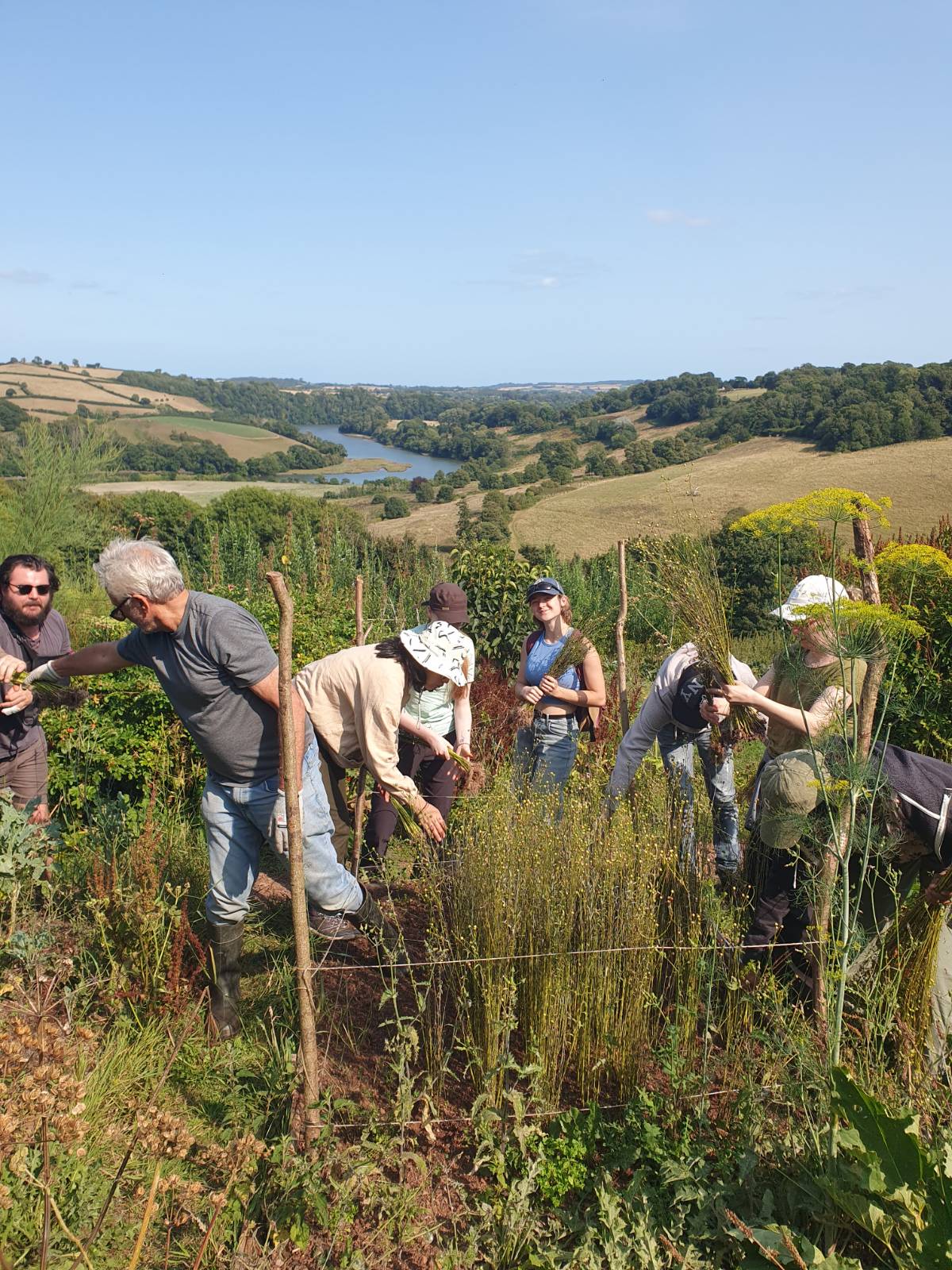
Flax is grown in small patches throughout our community, it is then harvested and processed together in autumn. The aim is to spin the flax into yarn to enable the weaving or knitting of cloth.
During 2025 we had one main kick-off event in April, where we learned more about the history and importance of flax from expert speakers and growers. Anyone who signed up to the project was then invited to pick up their seeds and growing instructions from the Totnes Climate Hub and was also invited to our community Signal group. This vibrant community of growers has blossomed and the project is currently exploring next stages of processing flax into yarn.

Our Totnes Grows Flax Celebration on 22nd November at School Farm welcomed folks involved in the project till that point in the year or not. The event offered short talks, processing demonstrations and a chance to get hands-on with the processing equipment to the whole community.
Who is involved in the project?
Viktoria Erlacher-Downing from Transition Town Totnes, in collaboration with Zoe Gilbertson and Sophie Scanlon of Liflad CIC. Liflad (which means livelihood in Old English) are co-ordinating a Southwest wide flax and processing project, bringing back small-scale bioregional production of useful materials such as clothing, textiles and paper. They are flax, linen and textile supply chain experts, co-ordinating other related projects both nationally and internationally.
Further reading:
You can read Zoe’s recent Churchill report on ‘Bioregional Resilience Through Bast Fibres ‘ here: https://www.liflad.co.uk/bioregional-resillience-through-bast-fibres-report/
Brigitte Kaltenbacher runs a similar project in Surrey, there are great resources on their website and you can also sign up for more detailed zoom guidance classes. https://letsgrowflax.org.uk/flax-resources/
The original Swedish project: https://hemslojden.org/gora-och-besoka/1-kvm-lin-2/
The Netherlands project: https://thelinenproject.online/previous/1m2-vlas/
The Austrian project: https://1qmlein.at/en/
.png)


Registered Charity 1138865 Company Limited by Guarantee: 06287039



.jpeg)
.jpg)
.jpg)


